PREMISES LIABILITY · TAMPA, FLORIDA
After an assault or robbery, you may be left with injuries, unanswered questions, and a place that no longer feels safe. If a property’s security failures contributed to what happened, Baird Law Group can help you understand whether you have a civil claim.
Free consultation · No obligation
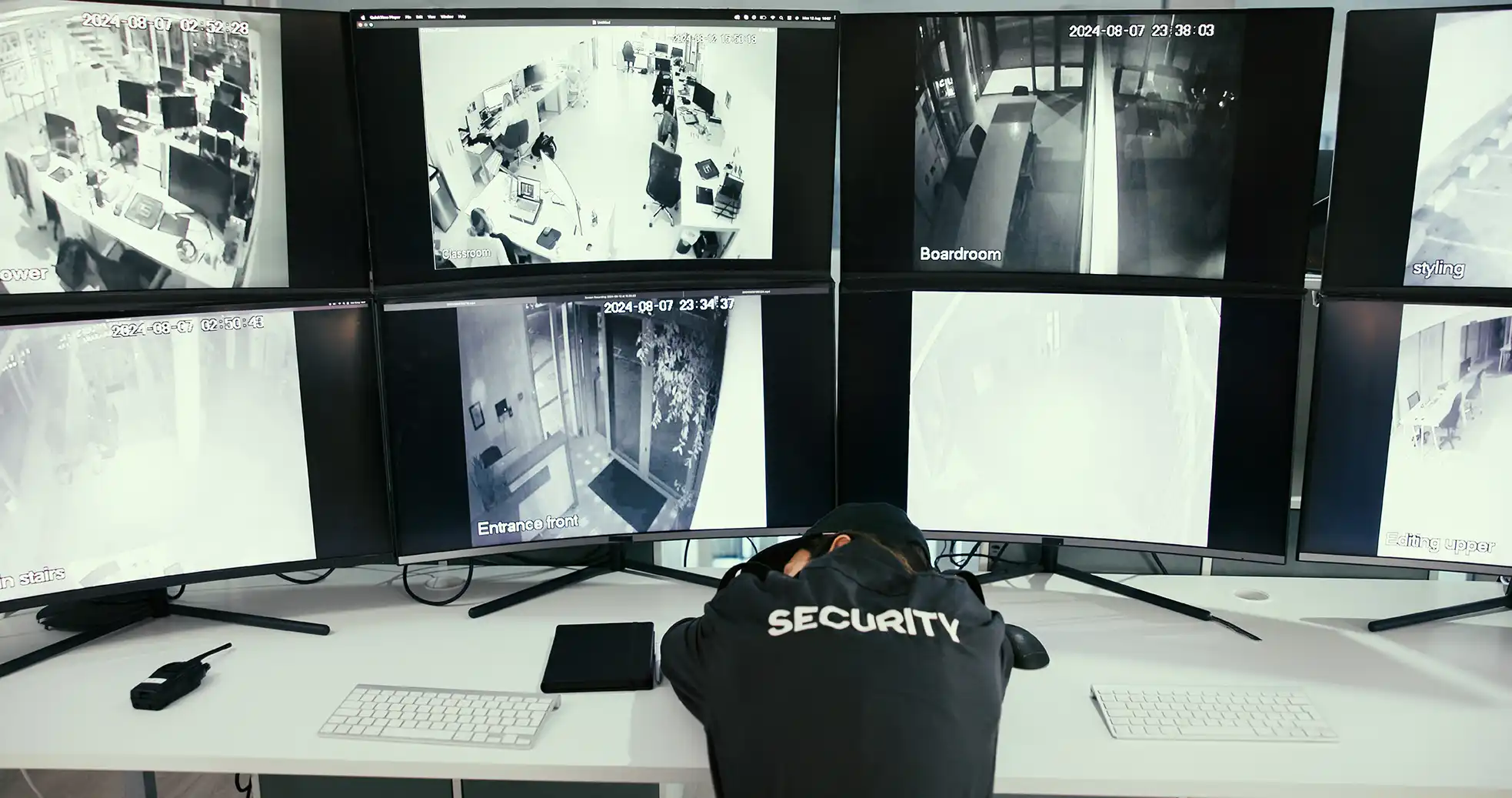
Illustrative image; not a photograph of a client incident.
FLORIDA COUNSEL
INSURANCE PERSPECTIVE
TAMPA OFFICE
ON THIS PAGE
UNDERSTANDING YOUR OPTIONS
Negligent security is a type of premises liability claim involving injury from foreseeable criminal activity on a property. It asks whether someone responsible for the premises failed to take reasonable security precautions and whether that failure helped cause the injury.
The terms inadequate security and negligent security commonly describe the same issue. A civil claim may involve a landlord, business operator, property manager, or another party with relevant control and duties. An assault on someone else’s property does not, by itself, establish liability.
A criminal investigation addresses the attacker’s conduct. A civil property claim examines any legally actionable security failure. You do not need to resolve those questions yourself before asking for an evaluation.
WHEN RESPONSIBILITY MAY EXTEND TO THE PROPERTY
A careful review connects the property’s responsibilities with the circumstances of the incident. Four issues usually guide the investigation:
01
Who controlled the area, and what duty did that party owe you? Your relationship to the property and the location of the incident matter.
02
What did the responsible party know, or reasonably have reason to know, before the incident? Relevant prior events, threats, complaints, and surrounding circumstances may help answer that question.
03
Did the security response fall short of reasonable care under the circumstances? A missing camera or guard is not automatically proof of negligence.
04
The evidence must connect an actionable failure to the injury and resulting losses. A security defect unrelated to the attack is not enough.
PLACES & CONDITIONS
Claims can arise at apartment communities, hotels, parking garages, shopping centers, restaurants, bars, and other commercial premises. The property type alone does not determine responsibility.
For example, an ignored report of a broken entry lock may raise different questions from an escalating confrontation that staff witnessed inside a bar. The response must be evaluated in its actual setting.
For injuries involving walking surfaces rather than criminal conduct, see our slip, trip and fall representation.
HOW BAIRD LAW GROUP HELPS
Your account is the starting point. Depending on the facts, the work may include the following steps.
01
Identify surveillance footage, access logs, incident reports, and other records that may need prompt preservation.
02
Review ownership, management, leases, and security arrangements to understand who controlled the area and the relevant precautions.
03
Look for relevant complaints, earlier incidents, repair requests, and records showing what was known before the injury.
04
Compare the circumstances with reasonable precautions, consulting appropriate experts when needed.
05
Gather medical and financial evidence and examine potentially applicable insurance, including exclusions and coverage disputes.
06
Present the evidence in negotiations and prepare for litigation when appropriate. The facts and legal merits guide the approach.
EVIDENCE CAN DISAPPEAR
A useful investigation looks beyond the final moments of an attack. Some records explain what happened; others show what the property knew and how it responded.
Ask about preservation early. Video systems may overwrite recordings, and witnesses may become harder to reach. Do not enter restricted areas or put yourself at risk to gather evidence.
WHY ATTORNEY EXPERIENCE MATTERS
Cory Baird has been admitted to practice in Florida since May 3, 2002. Before establishing Baird Law Group, he defended insurance companies in personal injury litigation. That background offers perspective on how insurers assess disputed liability, medical evidence, and settlement positions.
His education includes a law degree and an M.B.A. from Stetson University. The firm’s approach emphasizes direct attention and clear explanations so clients can make informed decisions.
Personal injury representation from Baird Law Group in Tampa.
AFTER AN ASSAULT OR SECURITY-RELATED INJURY
Your safety and recovery come first. When you are able, these steps can help preserve useful information.
1. Move to safety and seek care
Call 911 if you face immediate danger or need emergency help. Seek medical attention and tell your provider what happened.
2. Report the incident
If possible, report it to law enforcement and the property’s management. Keep report numbers and copies of your communications.
3. Preserve what you already have
Save photographs, messages, receipts, witness information, and records of earlier security complaints. Keep original files.
4. Ask about prompt legal review
Discuss preservation requests and deadlines with counsel. Understand any statement or release before signing it; a criminal investigation does not automatically pause a civil deadline.
FLORIDA LAW & DEADLINES
These summaries provide general information. The incident date, filing date, parties, and applicable law can change the analysis.
Florida generally allows two years for an action founded on negligence under § 95.11(5)(a). The 2023 change applies to claims accruing after the law’s effective date. Older claims, different causes of action, and exceptions require separate analysis. Do not calculate your deadline from this page.
For covered property claims involving a third party’s crime, § 768.0701 requires consideration of everyone who contributed to the injury, including the criminal actor. Under applicable § 768.81 rules, a claimant’s own fault can reduce recovery; more than 50% fault for one’s own harm bars recovery. Application depends on the claim and relevant dates.
Under § 768.0706, qualifying properties with at least five dwelling units on a parcel may receive a presumption against liability by substantially implementing specified security measures, an assessment, and employee training. The owner or principal operator must establish compliance. This is not automatic immunity, and the statute creates no private cause of action.
POTENTIAL COMPENSATION
Recoverable damages depend on liability, causation, proof, and applicable law. Insurance coverage and other practical issues also affect a case. No amount can be promised from a description of the incident.
If inadequate security contributed to a death, a wrongful death claim may be available. Florida law determines who brings the action and which survivors and estate losses qualify.
WHY CHOOSE BAIRD LAW GROUP
Baird Law Group’s office is at 701 S. Howard Ave., Suite 201, Tampa. You can ask about a potential security claim without having all the evidence or knowing who may be responsible.
We focus the initial discussion on what happened, the injuries involved, and the next steps that may help. You should leave with a clearer understanding of the issues—not a promised outcome.
Explore our practice areas or visit our contact page for office information.
FREQUENTLY ASKED QUESTIONS
They commonly refer to the same type of premises liability claim: an allegation that unreasonable security precautions contributed to an injury from foreseeable criminal activity.
Possibly. Control of the area, your relationship to the property, relevant notice, security conditions, and causation all matter. Qualifying multifamily properties may also assert the statutory presumption discussed above.
No. The question is whether reasonable care required a particular precaution under the circumstances and whether an actionable failure contributed to the injury. No single security feature decides every case.
An unidentified attacker does not automatically rule out a claim against a responsible property party. Evidence must still establish the required elements, and Florida’s fault-allocation rules can affect the case.
Potentially. The review may include prior disturbances, warnings, what staff observed, and the response to an escalating situation. Being injured at a bar does not automatically make the business liable.
Florida’s general negligence period is two years, but claim dates, exceptions, and different legal theories can change the answer. Obtain a case-specific deadline review promptly; useful evidence can disappear much sooner.
The initial case evaluation is free and carries no obligation to hire the firm. Ask about the fee agreement, litigation costs, and payment terms before representation begins.
Start with contact information and a brief description of the incident and its approximate date. Do not send confidential, sensitive, or time-sensitive documents through the website form. The firm can explain how to provide additional records.
START WITH A CONVERSATION
You do not have to know whether the property was legally responsible before reaching out. A free case evaluation can help clarify the evidence, deadlines, and next steps.
FREE CASE EVALUATION
Complete the form below and Baird Law Group will contact you.
Submitting this form does not create an attorney-client relationship. Please do not send confidential, sensitive, or time-sensitive information. Read our Privacy Policy.
Legal information: This page provides general information and is not legal advice. The facts and applicable law determine each case. Past results do not guarantee future outcomes.
Sources: Florida Statutes §§ 95.11, 768.81, 768.0701, 768.0705, and 768.0706 (linked above). See also Bing v. Alachua County (Fla. 1st DCA 2024) for discussion of premises liability, visitor status, and duties involving third-party conduct.