
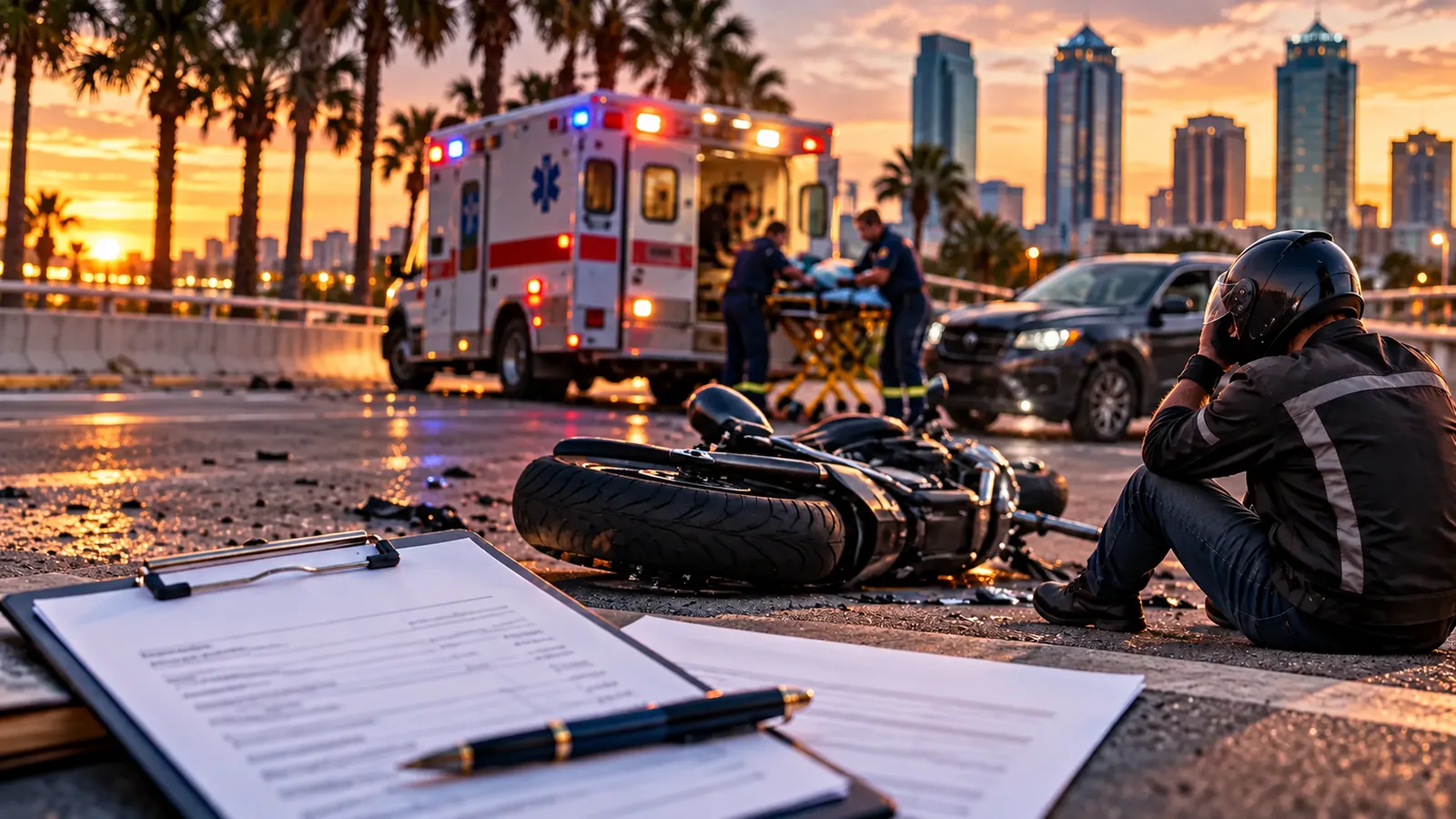
Tampa Motorcycle Accidents: Who Covers Your Medical Expenses?
You were riding home on Dale Mabry when a driver turned left right in front of you. Now you’re facing an ER bill, a damaged bike, and a question most riders never think about until it’s too late: who pays for all of this?
If you drive a car in Florida, your own insurance pays first after a crash. Motorcycle riders don’t get that safety net. That surprises a lot of people, and it can leave injured riders paying out of pocket while the insurance companies argue.
It’s a bigger problem than most people realize. Florida has led the nation in motorcycle deaths three years running, with 578 riders killed and more than 8,000 injured in 2024 alone. Here’s what Tampa riders need to know about paying for medical care, protecting a claim, and the deadlines that matter.
Why Florida PIP Doesn’t Cover Motorcycle Riders
Florida is a no-fault state. Car drivers must carry $10,000 in Personal Injury Protection (PIP), which pays their medical bills no matter who caused the crash. (If you were in a car, read about Florida’s 14-day PIP rule before you do anything else.)
Motorcycles are treated differently. Florida’s no-fault system generally does not provide PIP benefits to motorcycle riders or passengers. That means:
- Riders aren’t required to carry PIP on their bikes.
- The PIP on the car that hit you generally won’t pay for your injuries.
- Your medical bills can start piling up from day one, with no automatic coverage behind them.
The good news: you’re not out of options. You just need to know where to look.
Who Pays Your Medical Bills After a Motorcycle Crash?
Without PIP, your recovery usually comes from one or more of these sources:
- The at-fault driver’s bodily injury insurance. If a driver caused the crash, their bodily injury liability coverage can pay for your medical bills, lost wages, and pain and suffering. The catch: Florida doesn’t require most drivers to carry bodily injury coverage, and many carry low limits.
- Your uninsured/underinsured motorist (UM/UIM) coverage. If the driver has no bodily injury coverage, or not enough, uninsured/underinsured motorist coverage on your own policy can step in. For riders, this is often the most important coverage you can buy.
- Medical payments coverage (MedPay). Some motorcycle policies include MedPay, which helps with medical bills regardless of fault.
- Your health insurance. Health insurance can cover treatment, but your insurer may later seek repayment from your settlement.
- A claim against other responsible parties. A defective part, a dangerous road condition, or a negligent business may share the blame.
Sorting out which policies apply, and in what order, is where a Tampa motorcycle accident lawyer can make a real difference.
Florida’s Helmet Law and Your Claim
Under Florida Statute § 316.211, you can legally ride without a helmet only if you are over 21 and carry an insurance policy with at least $10,000 in medical benefits for motorcycle crash injuries. Every rider, helmet or not, must wear approved eye protection.
Riding without a helmet doesn’t automatically ruin your claim. But expect the insurance company to argue that a head injury would have been less severe with one. That argument can be used to reduce what you recover, so it’s one more reason to talk to a lawyer before you talk to an adjuster.
Tip: check your policy today. If you ride without a helmet and don’t have that $10,000 in medical coverage, you’re breaking the law and leaving yourself exposed.
What to Do After a Motorcycle Accident in Tampa: A Checklist
- Call 911. A police report creates an official record of the crash and who was involved.
- Get medical care right away. Even if you feel okay, adrenaline can hide serious injuries. Prompt treatment protects your health and documents your injuries.
- Document the scene. Photograph the vehicles, your bike, skid marks, road conditions, traffic signals, and your injuries.
- Keep your gear. Don’t throw away your helmet, jacket, or boots. Damaged gear can show how the crash happened and how hard you were hit.
- Look for cameras. Note nearby businesses, traffic cameras, and doorbell cameras. Video is often overwritten within days.
- Collect information. Get the driver’s name, insurance, and license details, plus contact information for any witnesses.
- Talk to a personal injury lawyer. The sooner a lawyer is involved, the easier it is to preserve evidence and protect your rights.
- Talk to your insurance company only after speaking with a personal injury lawyer.
- Keep every record. Save medical bills, repair estimates, pay stubs showing missed work, and all letters from insurers.
“I Didn’t See Him”: Fault, Rider Bias, and the 2-Year Deadline
Many motorcycle crashes happen when a driver turns left in front of a rider, changes lanes without checking, or opens a door into traffic. Afterward, the driver’s most common words are “I didn’t see him.”
Insurance companies often turn that around and blame the rider for speeding, lane splitting, or being hard to see. That matters because of two Florida rules:
- Comparative fault. If you are found partly at fault, your compensation goes down by your share of the blame. If you are found more than 50% at fault, you generally recover nothing.
- The deadline. For most negligence claims from accidents after March 24, 2023, you have only two years to file a lawsuit.
Evidence like video, witness statements, and crash reconstruction can push back against unfair blame, but only if it’s gathered early.
Frequently Asked Questions
Does PIP cover motorcycle accidents in Florida?
Generally, no. Florida’s PIP system generally does not cover motorcycle riders or passengers, so riders must look to other coverage, such as the at-fault driver’s insurance, UM/UIM, MedPay, or health insurance.
What if the driver who hit me has no insurance?
Florida doesn’t require most drivers to carry bodily injury coverage. If the driver has none, or not enough, your own uninsured/underinsured motorist coverage may pay for your injuries.
Can I still recover if I wasn’t wearing a helmet?
Possibly, yes. The insurer may argue your injuries would have been less severe with a helmet, which could reduce your recovery.
What if I was partly at fault?
You can still recover as long as you are not more than 50% at fault, but your compensation is reduced by your share of the fault.
How long do I have to file a motorcycle accident lawsuit in Florida?
For most negligence claims from accidents after March 24, 2023, the deadline is two years from the date of the accident.
Hurt in a Motorcycle Accident? Talk to Baird Law Group
After a motorcycle crash, you shouldn’t have to fight the insurance companies and unfair assumptions about riders on your own. Baird Law Group helps injured riders throughout Tampa Bay find every available source of coverage, build the evidence, and meet critical deadlines.
Learn more about how our Tampa motorcycle accident lawyer can help, or call 813-849-2679 for a free case evaluation.
We take your case personally.
This article is for general informational purposes only and is not legal advice. Reading it does not create an attorney-client relationship. Last reviewed: October 2026.