
WRONGFUL DEATH · TAMPA, FLORIDA
Tampa Wrongful Death Attorney
A sudden death can leave your family with questions no one has answered. What happened? Could it have been prevented? Who will handle the insurance calls and the bills?
Baird Law Group helps families examine a possible wrongful death claim, protect evidence, and understand their options under Florida law. Your first conversation with us is free.
No obligation to hire the firm. No attorney’s fees or costs unless you recover.
You can call before you have all the paperwork.
A report number, an insurance letter, or a brief account of what happened is enough to begin the conversation.
FLORIDA COUNSEL
Cory Baird: admitted in 2002
INSURANCE BACKGROUND
Former insurance-defense attorney
PERSONAL ATTENTION
Free initial case evaluation
TAMPA OFFICE
701 S. Howard Ave., Suite 201
ON THIS PAGE
UNDERSTANDING WRONGFUL DEATH
When a loss raises questions about responsibility
A wrongful death claim is a civil action arising from a death caused by legally actionable conduct. Florida law covers negligence, other wrongful acts, and certain breaches of contract or warranty when the person who died could have pursued damages had they survived. Fla. Stat. § 768.19.
The investigation must connect the conduct to the death. A serious accident, a death during medical treatment, or an incident on someone else’s property does not automatically establish a claim.
What must a negligence case establish?
- A duty of care: what the person or business was legally required to do.
- A breach: how the conduct fell short of that duty.
- Causation: whether that failure caused the death.
- Recoverable losses: the harm Florida law allows the survivors or estate to claim.
THE ESTATE AND THE FAMILY
Who can file a wrongful death lawsuit in Florida?
Who is the personal representative?
The personal representative is appointed to act for the estate. A will may name the person intended to serve, but the appointment still needs to be addressed through the probate court. If no estate has been opened, tell us at the first consultation. Fla. Stat. § 733.601.
Which relatives are survivors?
The statutory definition includes a spouse, children, and parents, along with blood relatives and adoptive siblings who were partly or wholly dependent on the deceased for support or services. Florida treats children under 25 as minors for this Act. Fla. Stat. § 768.18.
Survivor status and the right to a particular kind of compensation are different questions. A lawyer needs to understand the family relationships, ages, dependency, and circumstances of the death before explaining what may be recoverable.
THE CIRCUMSTANCES MATTER
Fatal incidents we can help your family evaluate
The firm’s wrongful death practice includes traffic and boating accidents, inadequate security, and medical malpractice. The evidence and legal requirements vary with the cause of death.
Traffic and boating accidents
A fatal vehicle collision may call for crash reconstruction, witness interviews, and an examination of vehicle data. Boating incidents can also involve federal maritime rules, so the governing law must be identified early.
Unsafe property and medical negligence
A fatal assault may raise inadequate-security questions if a property owner’s legally actionable failure contributed to the harm. A death involving medical care requires a separate assessment of the treatment, causation, and Florida’s medical-negligence requirements.
HOW BAIRD LAW GROUP HELPS
We handle the legal work and explain the decisions.
Families should know what is being investigated and why. Our work follows the evidence while keeping the practical needs of the family in view.
01
Find and preserve the facts
Identify relevant records, witnesses, surveillance footage, and physical evidence that can help establish what happened. Send evidence preservation requests when appropriate and determine whether additional analysis by qualified professionals is necessary.
02
Identify the claim and its value
Examine potential defendants, insurance coverage, estate authority, and the losses recoverable by each beneficiary. Account for the support and services the deceased provided.
03
Handle the claim through resolution
Communicate with insurers and opposing counsel, evaluate offers, and prepare for litigation when necessary. Explain the choices so the personal representative can make informed decisions.
EVIDENCE WORTH PRESERVING
The records can tell a story the initial report does not.
Depending on the incident, useful evidence may include:
- Police, incident, 911, and emergency-response records.
- Original photographs, surveillance video, dashcam footage, and witness contacts.
- Medical records, the death certificate, and available medical examiner findings.
- Vehicles, equipment, maintenance records, or other physical evidence.
- Insurance correspondence, proposed releases, and settlement offers.
- Earnings records, household expenses, and records of financial support.
A PRACTICAL START
Keep what you already have.
Save original messages and files. Make a note of who contacted the family and what they requested. Before an item connected to the incident is repaired, discarded, or transferred, ask whether it needs to be preserved.
You do not have to gather every document yourself. Identifying what exists and where it may be held is often the first useful step.
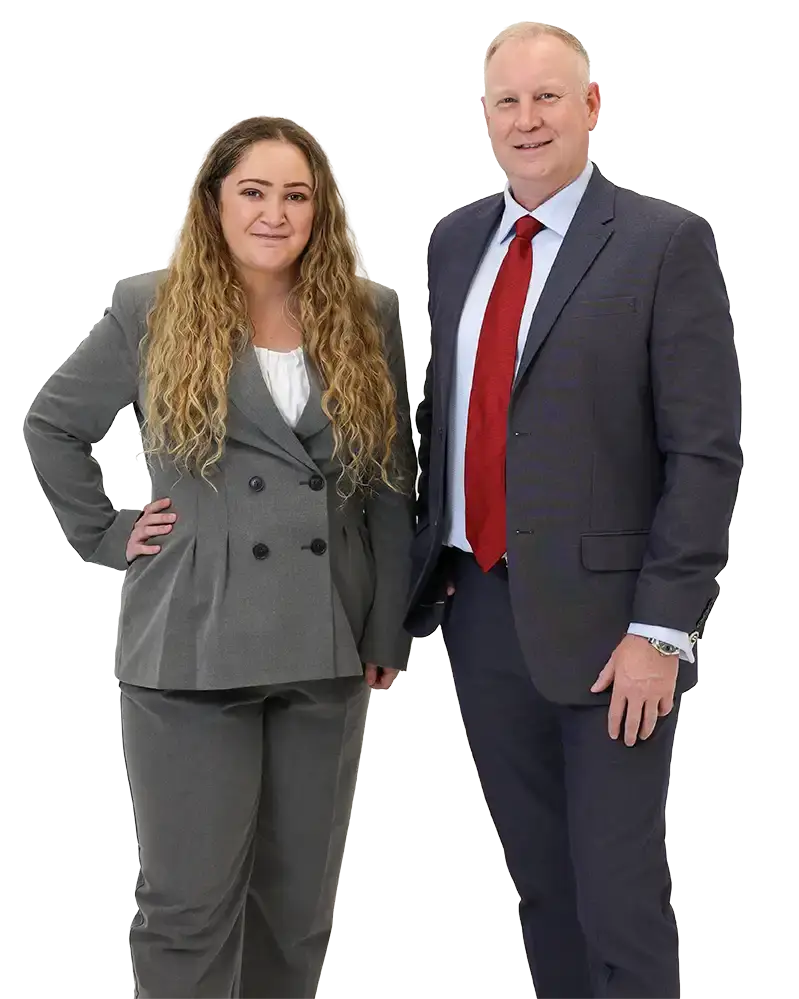
Courtney Porter and Cory Baird
Baird Law Group
EXPERIENCE ON BOTH SIDES OF AN INSURANCE CLAIM
Meet Cory A. Baird, Esq.
Cory Baird has been admitted to practice in Florida since 2002. Before founding Baird Law Group, he litigated personal injury matters for insurance companies. That experience informs how he evaluates liability disputes, records, and settlement positions.
He founded the firm to work directly with clients. For a family pursuing a wrongful death claim, the relationship should include clear explanations of the evidence, the available options, and the decisions ahead.
Florida Bar No. 550965
Admitted May 3, 2002
Stetson University College of Law
Class of 2001
THE FIRST FEW STEPS
What your family can do now
There is no need to make every decision at once. These steps can help keep information organized while you find out whether a claim should be pursued.
1. Keep one record of the incident
Collect report numbers, names, dates, correspondence, and bills in one place. Keep a separate list of unanswered questions rather than guessing at missing details.
2. Find the estate paperwork
Locate any will, probate filings, or personal-representative appointment. Keep a list of close surviving relatives and anyone who depended on your loved one for support.
3. Review requests before agreeing
An insurer may ask for a recorded statement, broad records authorization, or release. Understand the request and who has authority to respond. Your own insurance policy may impose cooperation duties.
4. Ask about deadlines promptly
Do not wait for a criminal case, a final report, or every medical record before checking the civil filing deadline. Evidence can disappear well before the time to sue expires.
FLORIDA LAW AND FILING DEADLINES
How long do you have to bring a wrongful death claim?
Florida generally allows two years to bring a wrongful death action, usually measured from the date of death. That is a starting point, not a deadline calculation for an individual case. Fla. Stat. § 95.11.
Special rules need an early review
Medical-negligence cases have pre-suit procedures and distinct timing rules. Claims involving government entities have notice requirements. Maritime law may affect a boating case. The incident, defendant, and type of claim all matter.
Florida also permits certain intentional-tort death claims against a natural person to be brought without the usual time limit. That narrow exception should not be assumed to extend a separate negligence claim against a property owner or business.
DO NOT RELY ON AN INSURANCE DISCUSSION
Negotiations do not, by themselves, extend the filing deadline.
Tell the attorney when the incident occurred, when your loved one died, and whether the family has received any notices or signed any documents.
COMPENSATION UNDER FLORIDA LAW
What losses may a wrongful death claim cover?
The law separates the losses of eligible survivors from those of the estate. It does not assign a price to a life, and it does not give every relative the same right to recover. The categories below are subject to the requirements of Fla. Stat. § 768.21.
Losses of surviving family members
- Support and services: qualifying financial contributions and household help lost because of the death.
- A spouse’s losses: companionship, protection, and mental pain and suffering.
- Children’s losses: qualifying loss of parental companionship, instruction, guidance, and mental pain and suffering.
- Parents’ losses: mental pain and suffering where the statutory conditions are met.
- Paid expenses: qualifying medical or funeral expenses paid by a survivor.
Losses belonging to the estate
- Earnings lost from injury until death, reduced as required to avoid duplicating survivors’ lost support.
- Future net accumulations the deceased would likely have saved, when the statutory eligibility conditions are satisfied.
- Qualifying medical or funeral expenses charged to the estate or paid by or on behalf of the deceased.
Records of employment, benefits, finances, and household contributions help distinguish these losses. The law does not simply award all future gross earnings to the estate.
Family relationships and the type of claim change the answer
For example, children’s eligibility for certain nonfinancial damages depends on age and whether a spouse survives. Parents of an adult child face additional conditions. Medical-negligence claims have specific restrictions on certain damages for adult children and parents of adult children under section 768.21(8).
What if responsibility for the death is disputed?
In applicable negligence cases, fault attributed to the deceased can reduce recovery, and the greater-than-50% fault rule can bar recovery. That threshold does not apply to wrongful death claims arising from medical negligence. The claim type and applicable law must be reviewed. Fla. Stat. § 768.81.
WORKING WITH OUR TAMPA FIRM
A place to bring the questions that remain
Baird Law Group’s office is at 701 S. Howard Ave., Suite 201, Tampa. We can review the circumstances, discuss what information is missing, and explain whether further investigation is warranted.
The initial case evaluation is free. The firm handles personal injury matters on a contingency-fee basis: no attorney’s fees or costs unless you recover. The written agreement explains the fee and cost terms before representation begins.
Learn about our firm or contact the Tampa office to arrange a conversation.
FREQUENTLY ASKED QUESTIONS
Tampa wrongful death FAQs
Can I speak with a lawyer before probate is opened?
Yes. You can ask about a potential claim while the estate arrangements are still being worked out. Tell the attorney whether a will exists, whether probate has begun, and whether a personal representative has been appointed.
Is a criminal conviction required?
No. A civil wrongful death claim is separate from a criminal prosecution. The absence of criminal charges does not, by itself, determine civil liability. Do not assume a pending criminal investigation pauses the time to bring a civil claim.
Can an adult child recover compensation?
Potentially. Adult children are included in the statutory definition of survivors, but the available damages depend on the circumstances. A surviving spouse and the medical-negligence restrictions can affect eligibility for particular losses. An attorney should review the family relationships before giving a specific answer.
What if the insurance company has already offered a settlement?
Keep the offer and any proposed release. Before signing, have the terms reviewed, confirm who has authority to settle, and determine whether any court approval is needed. A release can affect claims before the investigation is complete.
How much is a wrongful death case worth?
There is no dependable average that answers that question for an individual family. Responsibility for the death, the legally recoverable losses, supporting evidence, available insurance, and collectability all affect the evaluation. A promise of a specific amount before that work is done would be premature.
Will the case have to go to trial?
Some claims resolve through negotiation or mediation. Others require a lawsuit and may proceed to trial. The course depends on the evidence and the parties’ positions. The firm can discuss settlement proposals and the reasons for accepting or declining them.
How long will the case take?
The timeline depends on the investigation, estate administration, the parties involved, and whether litigation is necessary. Medical and technical evidence may take time to obtain. Ask which steps are expected next and what may affect their timing.
What should I bring to the first consultation?
Bring whatever you have: incident information, insurance letters, medical or funeral bills, estate documents, and a list of questions. You do not need a complete file before calling. The initial consultation is free and does not obligate you to hire the firm.
LET’S TALK
Start with what you know.
You do not need to decide whether to pursue a lawsuit before asking questions. Tell us what happened, what you have been told, and what your family needs to understand.
Free initial consultation
No obligation to hire the firm
701 S. Howard Ave., Suite 201, Tampa
FREE CASE REVIEW
Tell us how to reach you.
Complete the form and Baird Law Group can contact you about your request.
Please provide only a brief summary. Do not send sensitive or confidential information through this form. Submitting it does not, by itself, create an attorney-client relationship. Privacy Policy.
This page provides general information, not legal advice. The facts and applicable law determine the options in any case. Past results do not guarantee future outcomes.